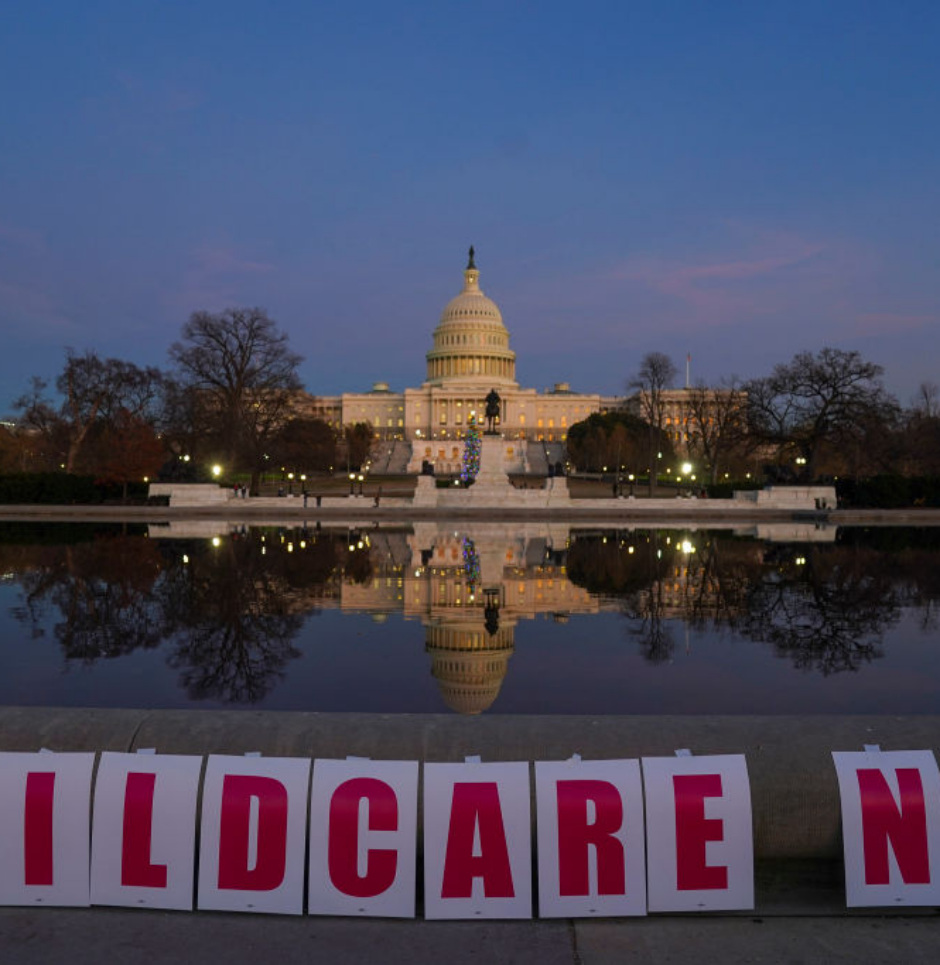
WASHINGTON, DC - DECEMBER 14: Childcare Now is spelled out on signs during Child Care Providers and Parents Rally to Pass Build Back Better at the U.S. Capitol on December 14, 2021 in Washington, DC. 50 years after President Nixon vetoed child care legislation, parents and providers rally to ensure child care is passed through Build Back Better. (Photo by Leigh Vogel/Getty Images for Child Care For Every Family Network)
CLASP has been engaging with partners through the Child Care for Every Family Network for many years to develop a strong foundation for universal child care rooted in a commitment to learning from one another's perspectives and expertise, supporting all families, centering those with diverse…
On September 12, 2016, California Governor Jerry Brown signed the College Student Hunger Relief Act (AB 1747), a bill designed to improve benefits access for low-income college students.
The Census Bureau’s annual report on poverty, income, and health coverage shows major economic improvement on a number of indicators, including a drop in poverty from 14.8 percent of Americans in 2014 to 13.5 percent in 2015.
A new guidebook from the U.S. Department of Housing and Urban Development (HUD) and the Wisconsin HOPE Lab provides college employees, as well as poverty advocates, strategies to address student housing insecurity and costs of living in higher education. Specifically, it suggests action steps to address high…
For single-parent families, child support from non-custodial parents is a critical way to reduce poverty. The Child Support Enforcement program (CSE) serves 16 million children as well as 22 million parents and caregivers each year. A recent report from the Office of Child Support Enforcement (OCSE) highlights…
In 2015, TANF spending on child care decreased by $45 million in 2015. Nationally, about $2.6 billion of TANF funds were used for child care through direct spending on child care and transfers to the Child Care and Development Block Grant (CCDBG).
CLASP has released a new memo in our WIOA Game Plan Opportunities for Action series. It serves as a reference guide on the WIOA adult program’s priority of service provision.
Today’s economy increasing requires post-secondary credentials for good jobs. President Obama has said every American should have at least one year of postsecondary education and training, leading to a credential. Yet our anti-poverty programs have rules that directly contradict those goals.