The SCORE Act Would Harm College Athletes by Codifying Inequity into Federal Law
By Christian Collins
The Student Compensation and Opportunity through Rights and Endorsements (SCORE) Act, H.R.4312, is the culmination of a multiyear effort from colleges and universities to preserve an outdated and unjust economic system. Following the landmark House v. NCAA federal antitrust settlement, which brought roughly $2.8 billion in back damages to former college athletes from uncompensated labor and established the first revenue-sharing model for institutions to directly pay students for athletic labor, Congress is attempting to permanently wipe out those hard-fought gains.
The SCORE Act conflates two distinct issues: the inequitable state of college athletics and the financial insecurity of institutions due to federal funding cuts. Taking rights away from students won’t solve either issue. This legislation is just an attempt by Congress to pass the blame from its own inaction onto students who are only seeking the right to be paid for their labor.
Seeking to comprehensively address inequities in college athletics is no excuse to codify the greed of institutions into federal law. The SCORE Act doesn’t create a more equitable college athletics system; rather, in its current form, it contains multiple provisions that directly harm college students by preserving the ability of institutions to profit off them without fair compensation, including:
- An antitrust exemption protecting institutions from liability for collusion to limit earnings of college athletes and their ability to freely transfer schools.
- Permanently barring college athletes from employment status, which prevents students from being protected by federal employment law.
- Preserving the ability of institutions to charge students athletic fees. This is a common practice; Division 1 Football Bowl Subdivision schools alone raised $668.5 million this way in 2023. The bill bans this practice only for institutions that earn more than $50 million in annual media revenue from athletics, which applies to less than 1 percent of all Title IV colleges and universities across the country.
- Pre-emption of existing state laws related to college athletics, which is a likely constitutional overreach by Congress going beyond its current legal jurisdiction over public education.
The SCORE Act’s Narrow Perspective Will Have Widespread Consequences
The bill’s primary objective is to deny college athletes basic federal labor protections and codify severe economic restrictions on current and future athletes that no other students on campus face. From smaller private schools that utilize athletic programs as an enrollment tool to large public universities that use athletics as public marketing and donor engagement opportunities, the labor of athletes extends far beyond their time on the field. Instead of providing additional protection for students from harassment and abuse brought by gamblers, preventing states from relying on gambling taxes to make up for larger federal funding shortfalls and fund athletic programs, and how institutions often spend more on coaching and staff compensation than on all financial aid for athletes, Congress has used the SCORE Act to prioritize allowing schools to pay their own students as little as legally possible.
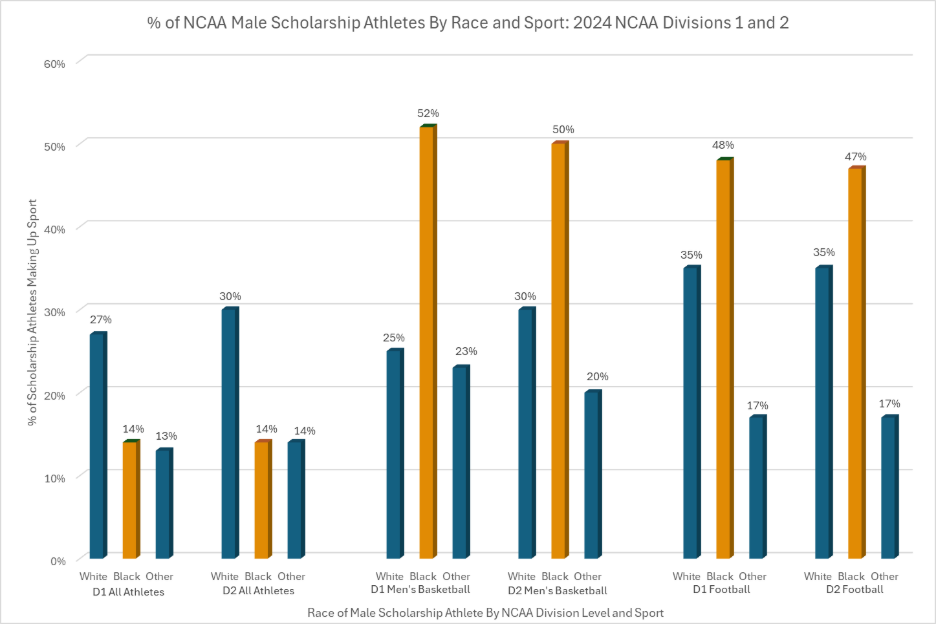
Concerningly, the authors of this bill failed to address the racialized impact it would have on marginalized students, especially Black men. The SCORE Act undercuts the notion that college athletics are a primary driver of socioeconomic mobility for young Black men, who represent majorities and pluralities of athletes competing in the highest revenue-generating sports (football and men’s basketball) across Divisions 1 and 2. This bill would codify academic institutions being able to reap billions in annual revenue from the uncompensated labor of Black students through a “plantation” economy, but not having to support their academic and professional development.
The SCORE Act Would Protect Institutions from the Consequences of Exploiting Their Own Students
Limiting the income potential of, and labor protections for, student workers on college campuses only signals that institutions care more about what money they can extract from students versus how they can best educate students. Institutions have made no complaints over the rampant revenue generation and athletics-related spending that they’ve embarked on for years, but are now begging Congress to stop athletes from receiving a fair share.
The SCORE Act is an attempt by a small subset of universities to preserve an inequitable economic system due to pure greed. Members of Congress should oppose this legislation and instead work to advance policies that support students by crafting legislation that includes the following provisions:
- Guaranteed collective bargaining rights and employment status for college athletes.
- Federally guaranteed health and safety standards for athletes regardless of competition level.
- Prohibiting public institutions from entering financial relationships with gambling companies, along with increased protections for students from being harassed by gamblers.
- Increasing federal spending on higher education so that states aren’t incentivized to promote sports gambling for fiscal sustainability.
Other CLASP publications on the exploitation of Black male college athletes include: